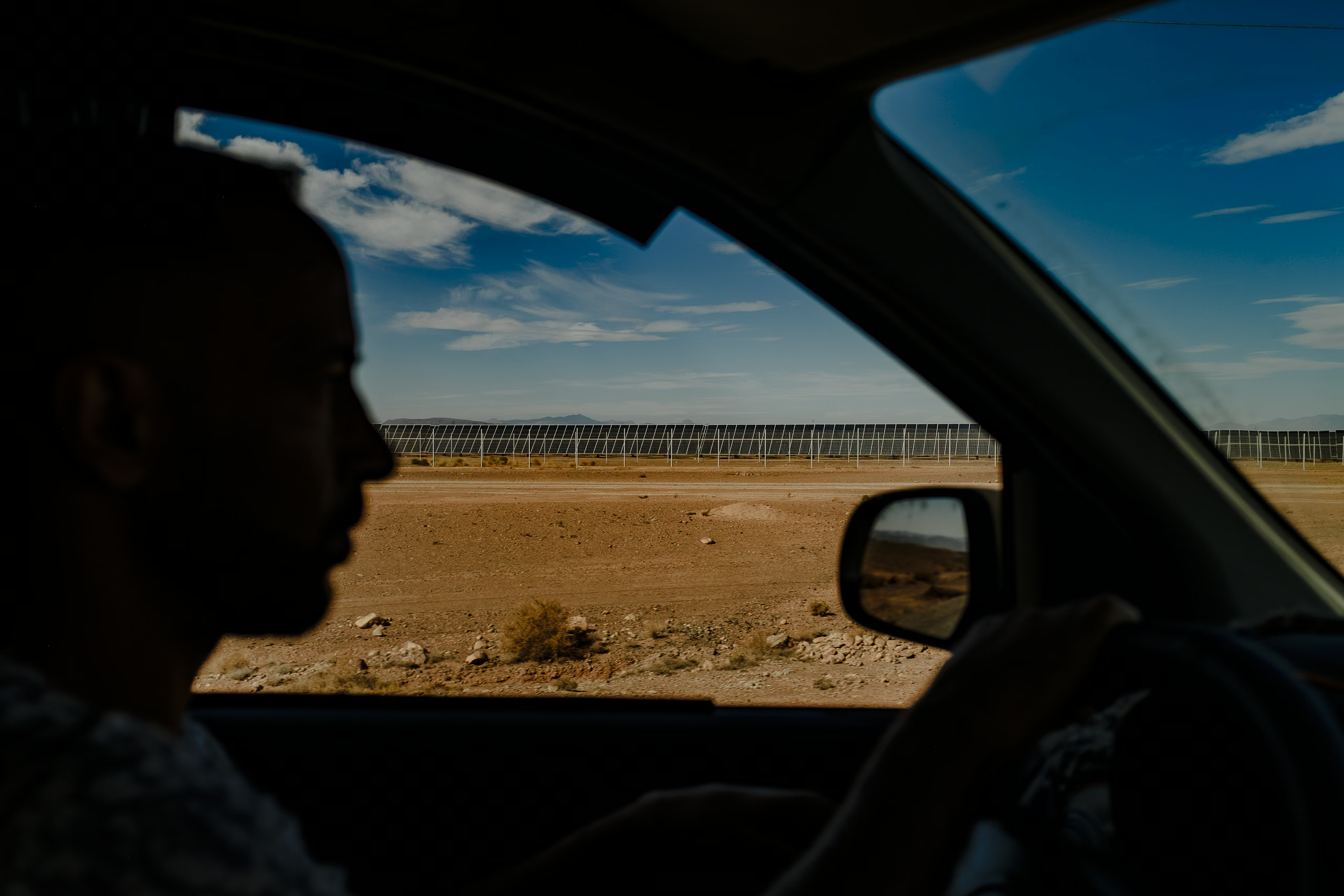
In the final year of my architecture degree at the University of Cambridge I received a grant to travel to Morocco and report on European-backed energy development south of the Atlas Mountains. There, I met with Indigenous Amazigh members who had benefited from earlier rural electrification programs in Morocco, but whose land and water had more recently been affected by energy developments destined for export to the country’s cities and beyond.
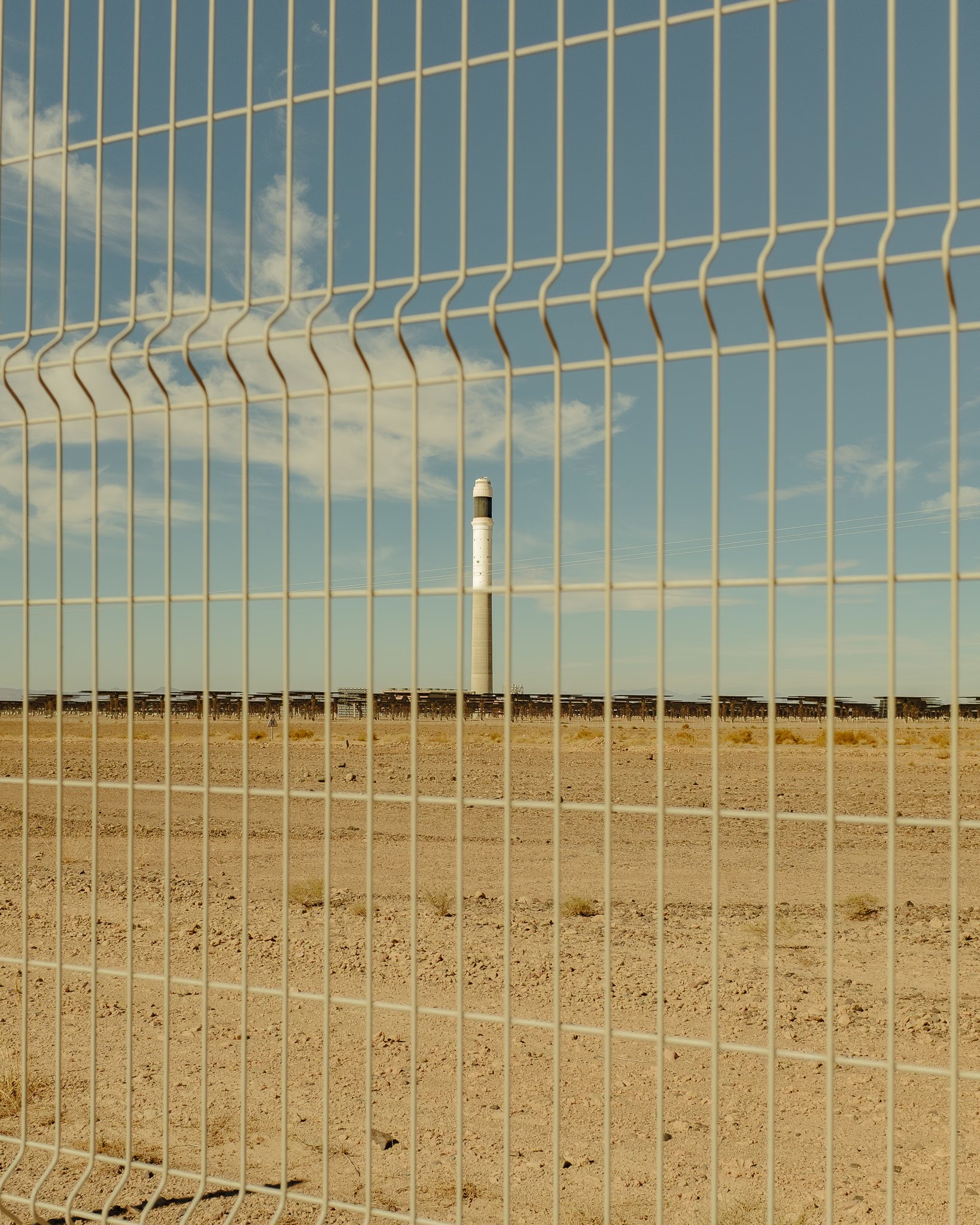
Much of this work focused on the Noor Ouarzazate concentrated solar power plant. The largest of its type in the world, NoorO provides low-emissions power to 2 million Moroccans, but various concerns have been raised about its role in dispossessing Amazigh tribes of their lands without fair compensation and its environmental side-effects.
Owing to a lack of legal protections of Amazigh land rights under Morocco’s Rural Affairs Directorate, University of Kentucky associate professor Karen Rignall has written, some local herders and farmers who previously enjoyed shared ownership to the land were unaware it had been sold from under their feet until NoorO was formally announced, nine months after the sale.
Further away In Fint, an Amazigh oasis village a few kilometers south of Ouarzazate, residents told me their water access was threatened by the solar plant. NoorO’s cooling systems use millions of cubic meters of water per year, sourced — like Fint’s water pipeline — from the Mansour Eddahbi reservoir. And during my visit, the reservoir’s levels were at just 12 percent of capacity. Should rain not come soon, villagers feared, the solar plant would take priority and they would be cut off.
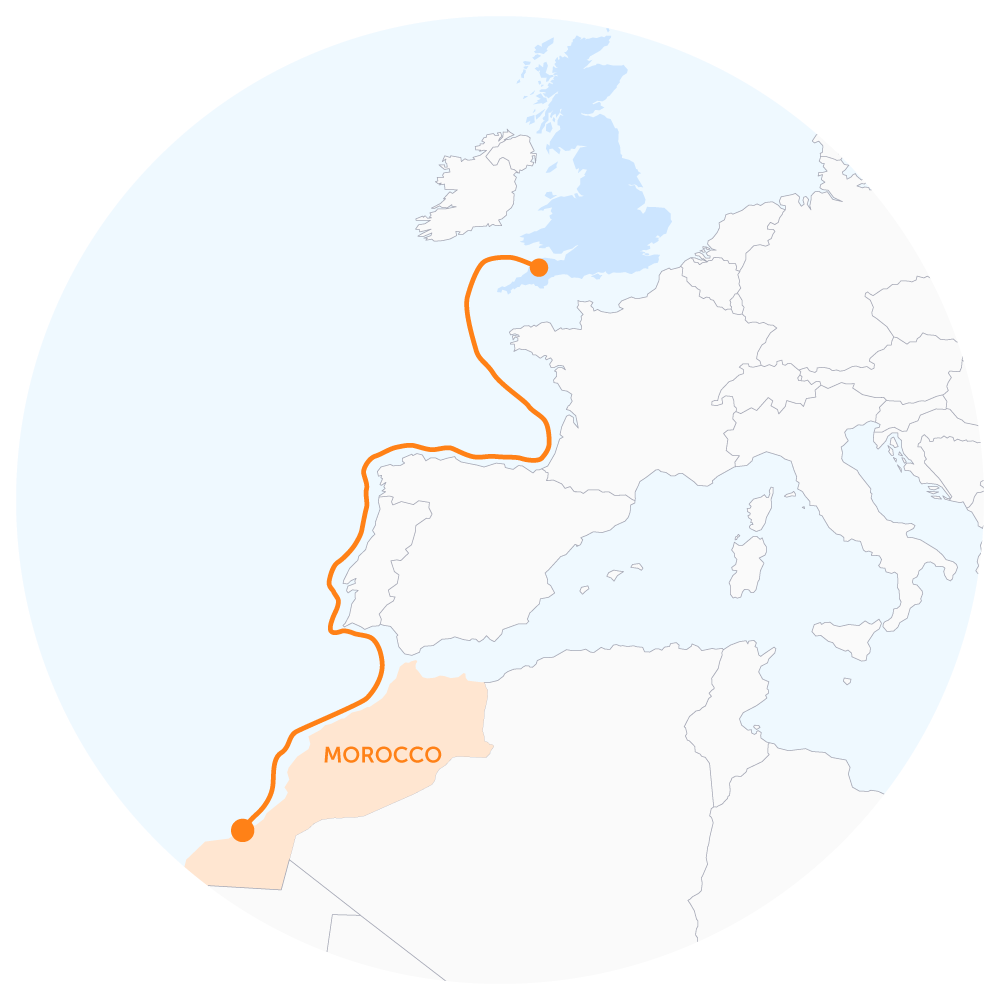
That was past precedent. But a plan by UK startup Xlinks represented a development of an even grander order. In Morocco’s southernmost region, Xlinks planned to develop enough renewable energy resources to meet 8 percent of UK demand, ferried back to Britain via a 3,000-kilometer undersea cable. But skepticism was circulating that Xlinks was planning to develop some of 960 square-kilometers of land required for the project across Morocco’s disputed international border with Western Sahara. Any such resource export from Western Sahara would be a potential violation of UK and international law, Joanna Allen, an associate professor of global development at Northumbria University and the author of a book on Western Saharan energy systems, told me.
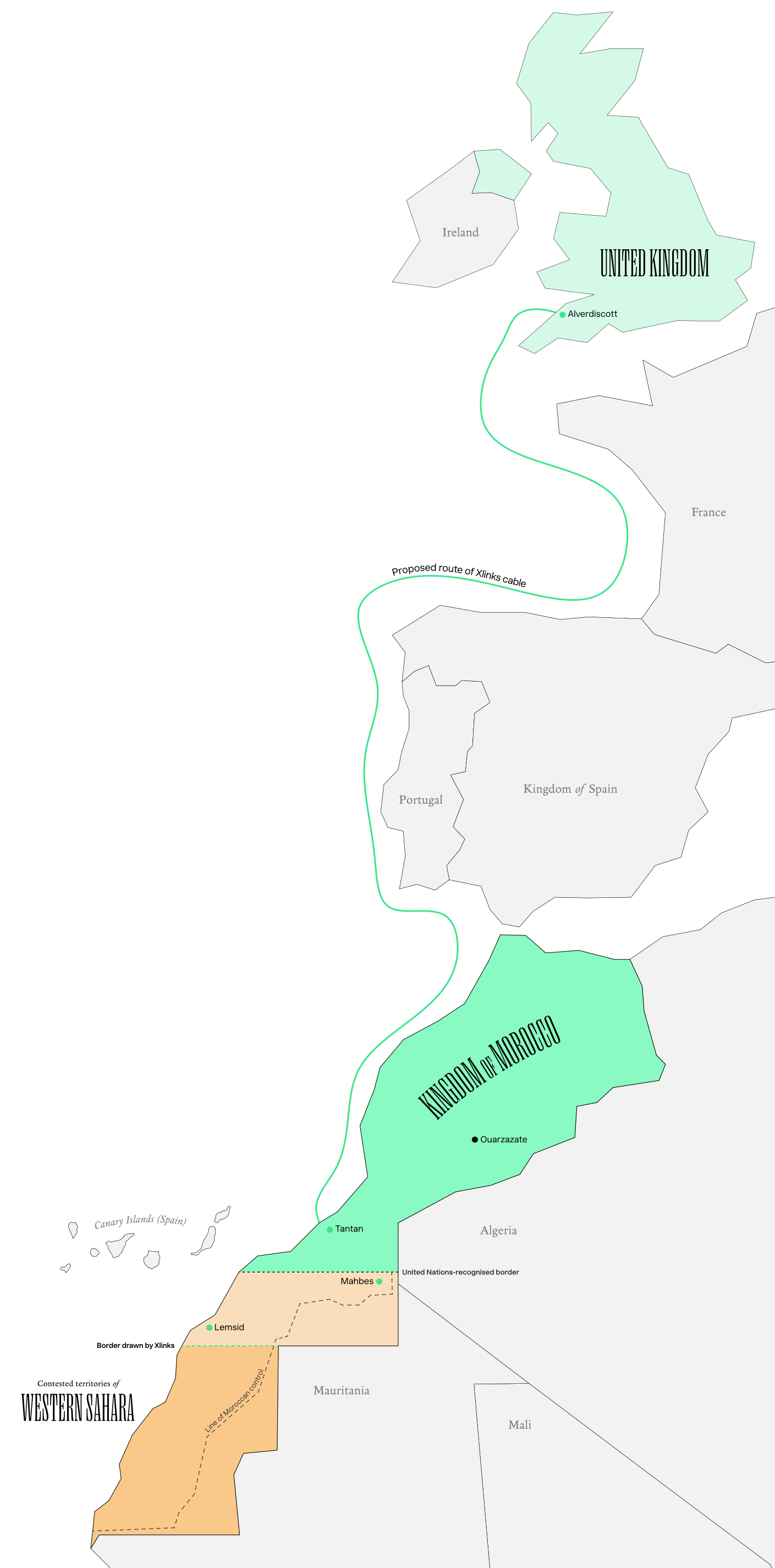
In October 2022, regional President Mbarka Bouaida told Al-Jazeera that three areas were under consideration for development as part of the project, with two of them — Mahbes and Lemsid — south of the internationally recognized boundary with Western Sahara, subject to one of the longest ongoing armed conflicts on earth.
Following the UK government’s decision to grant the project “Nationally Significant Infrastructure Project” and an expedited planning approval process in 2023, a spokesperson for the Department for Energy Security and Net Zero told me the project ”will not be constructed in the territory of Western Sahara”. But — in a marked contrast to the company’s high degree of transparency and consultation at the site of the cable’s UK terminus in Devon (“How will lorries reach the construction?” is one question answered on its website) — Xlinks has sidestepped questions about the project’s location from Western Sahara Resource Watch.
Further doubt has been cast by maps of the project used on Xlinks’ website. Maps have either not acknowledged the Western Sahara border or misrepresented its location. A map present on its site in April 2023 appeared to acknowledge Morocco’s authority over land all the way to the 26th parallel, despite the country’s international border only extending to the 27.7th parallel. The difference between the two lines allows for the inclusion of Mahbes and Lemsid, two of the three potential development regions mentioned by regional President Bouaida. (Xlinks did not respond to requests for comment).
Two years after the thesis was submitted, in June 2025, the UK’s new Labour government moved to reject the Xlinks project. “The project does not clearly align strategically with the government’s mission to build homegrown power here in the UK,” Energy Security and Net Zero Minister Michael Shanks said in a statement. The project had a ”high level of inherent, cumulative risk (delivery, operational, and security),” he added.
An excerpt of the thesis follows:
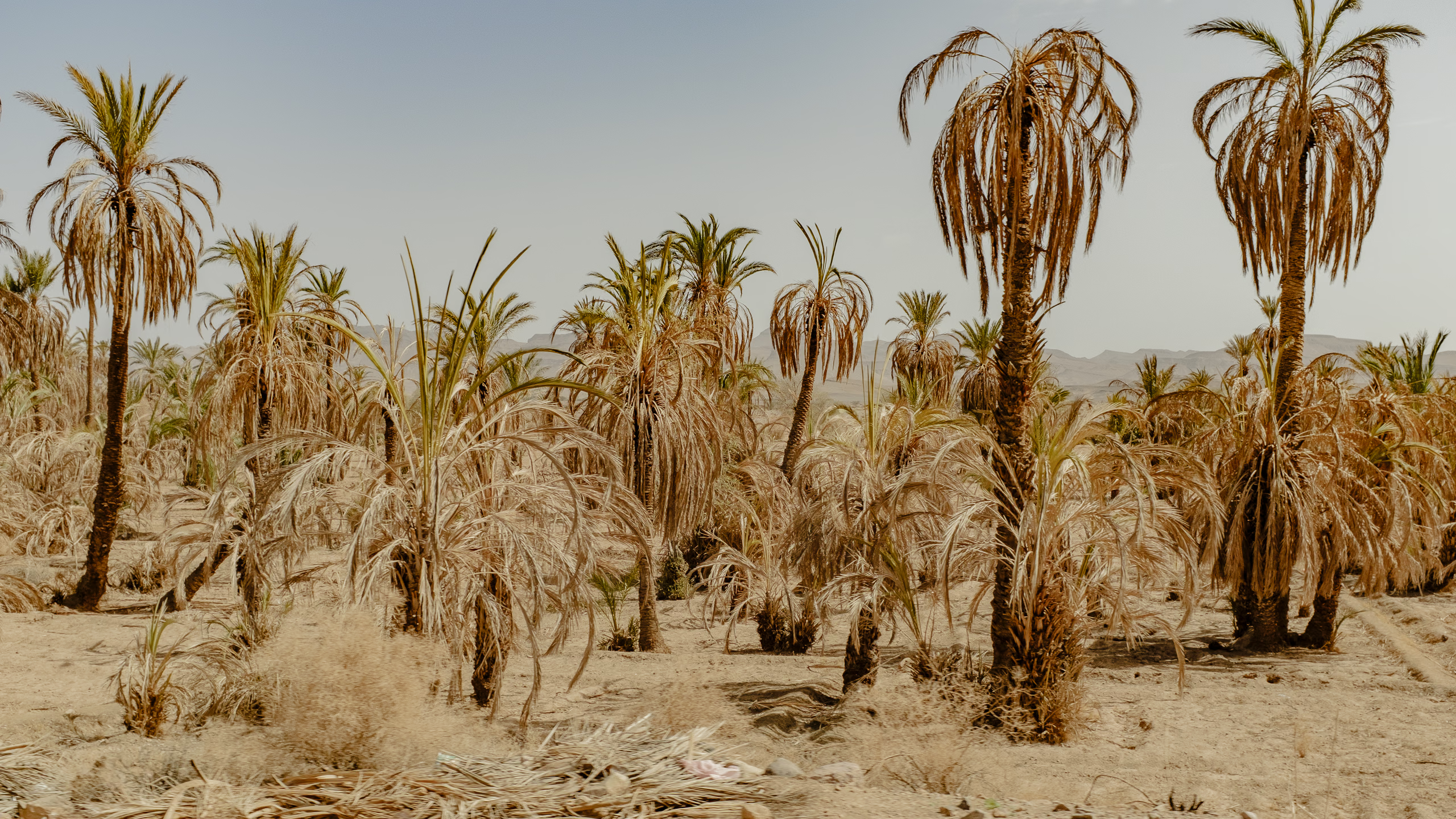
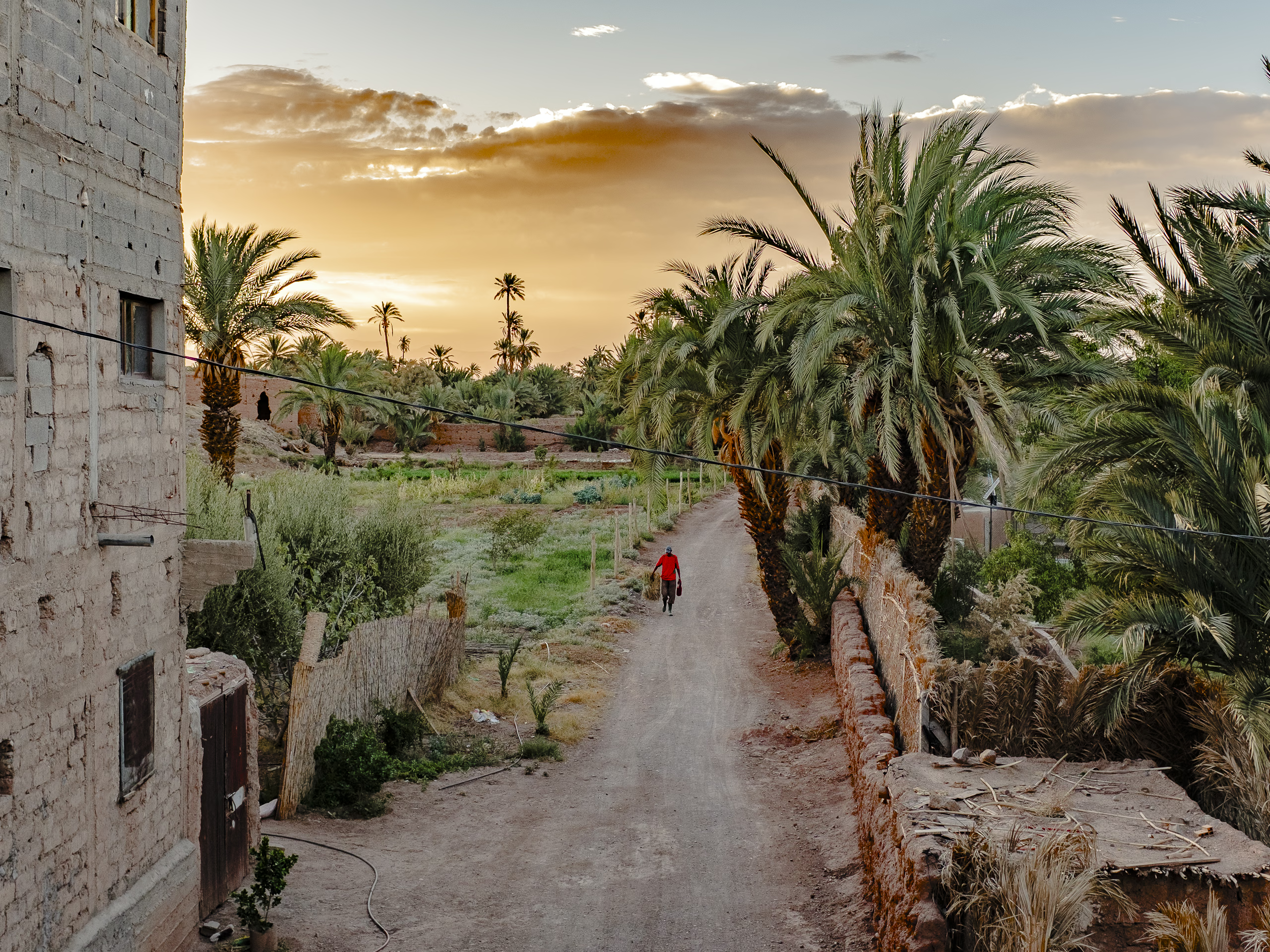
As I travelled to Ouarzazate in September 2022 Morocco was experiencing its deepest and longest drought in 40 years. Centuries-old palm groves had turned black and yellow, charred by August forest fires or simply parched from lack of water. To one grande taxi driver near Ouarzazate I showed a photo I had taken from the plane window leaving Stansted Airport: a sea of typically green fields turned parched and brown. The UK’s hottest ever temperature had been recorded only a few weeks before. At the edges of the Sahara desert, and in the centre of Cool Britannia, we agreed, there was an unignorable shift in how the world was behaving.
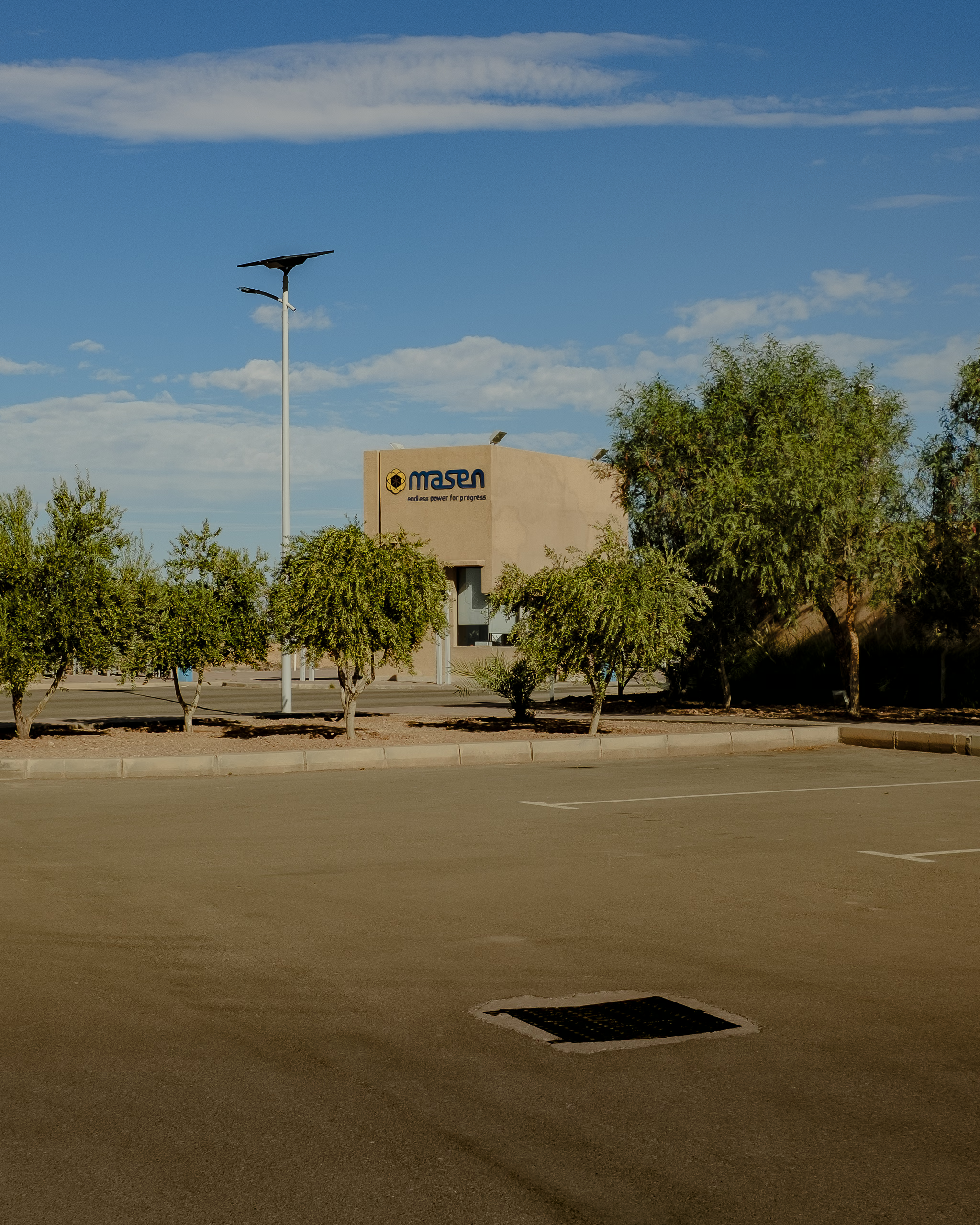
I was here to visit Noor Ouarzazate, a concentrated solar power installation inaugurated in 2018 that now supplies renewable electricity to two million Moroccans. The largest of its kind in the world, NoorO is hailed by MASEN, the Moroccan state energy agency, as an optimistic vision for a future of low-carbon energy security in a country which has long relied on imported fossil fuels. Passing junctions to its access road on the regional highway into town, the words ”endless power for progress“ shined out from aluminium signs reflecting the desert sun. ”MASEN,“ a Noor promotional video proclaims: ”an inexhaustible force of development.”
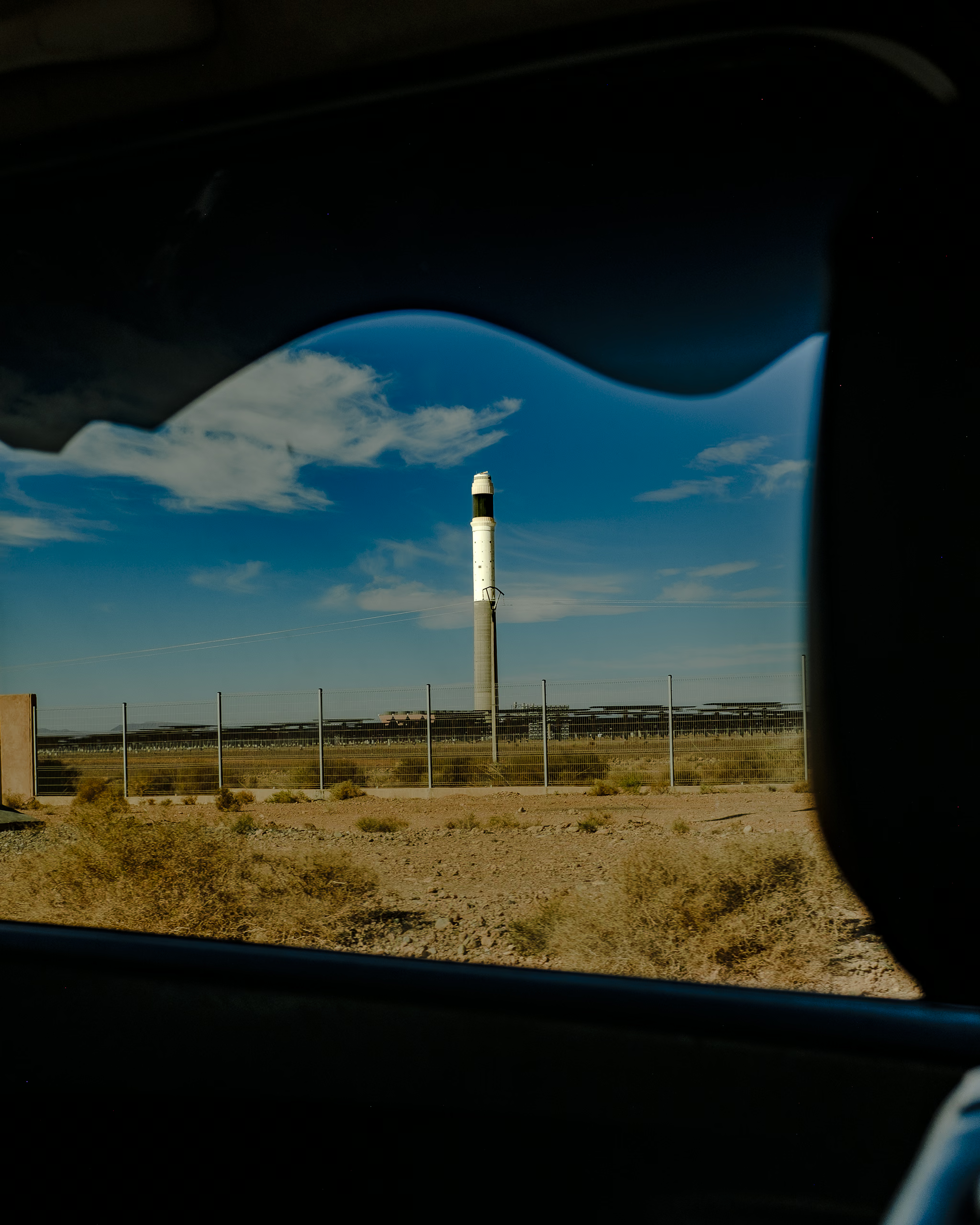
The plant has received breathless coverage in the anglophone press since its announcement in 2011 as a proof-of-concept for much grander plans of solar power territorialization at the edges of the Sahara. The energy promised by such plans is heralded as “inexhaustible”, inviting techno-utopian dreams of vast-scale installations blanketing deserts around the world exporting renewable power to far-away wealth and population centers. But for the Indigenous Amazigh populations who have inhabited these regions for centuries, the project tells a more complex story, bound up in conflicts over land rights, surveillance, environmental injustice and resource scarcity, while climate change has already made it tougher and tougher to survive from the region’s hyper-arid soils.
In the sub-Atlas regions of Morocco, water access was traditionally apportioned on a time basis under the highly-political nouba system of collective water rights — each irrigation channel being filled for a certain number of days per year. In the Drâa river basin of Ouarzazate’s Dadés valley, this remains true for the network of underground canals which reach the ‘last mile’ to each village; but, since the construction of the Mansour Eddahbi Dam in 1972, the upstream supply has been centrally controlled by the Ouarzazate Office of Agricultural Development. The dam was built under a government plan to expand Morocco’s irrigation area to increase crop yields, and for some decades it worked; but as sedimentation decreased the reservoir’s storage capacity and regional mining operations proliferated, the equation has begun to tip out of balance.
Add to that the country’s rapidly falling precipitation rates, and, in the words of a 2022 World Bank report, Morocco is entering “a situation of structural water stress, fast approaching the absolute water scarcity threshold of 500 m3 per person per year.” As climate change continues to take effect, the report notes, the challenge is likely to “gradually converge to a quasi-permanent condition.”
Owing to these shortages, annual releases to the six “hyper-arid” oases villages lying downstream from the reservoir have been cut recently from seven to four, with some farmers reporting as few as three or even two access periods, leading to lower yields and economic stress.
On top of this acute scarcity, the NoorO solar plant poses a new threat. During the project’s planning, a MASEN-funded report of the plant’s first phase found that it was likely to use less than its ‘consumption limit, at 1.75 million m3’ per year; but an earlier social and environmental impact report from the African Development Bank had projected annual water consumption of 2.5 to 3 million cubic metres, and warned that the project would have “major effects on soil sealing, surface water, the natural environment and fire risk, mainly related to the water consumption procedure involved in [the] wet cooling [system, and] the use of polluting substances.”
The project now operational, the Middle East Research and Information Project has reported that it is “impossible to get official statistics on actual water use,” in part because Noor, “the single largest user of dam water besides the city of Ouarzazate remains opaque about its usage.”
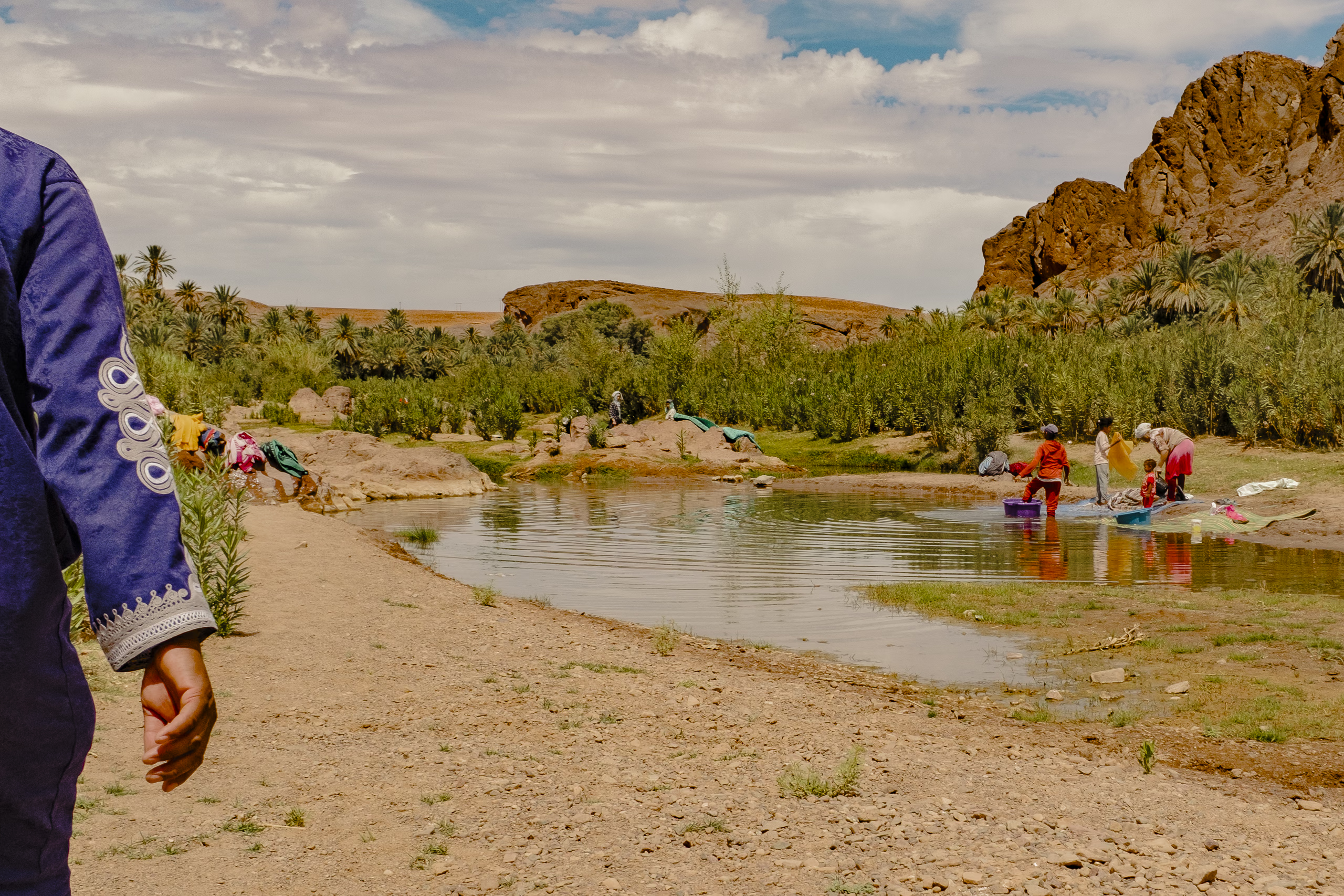
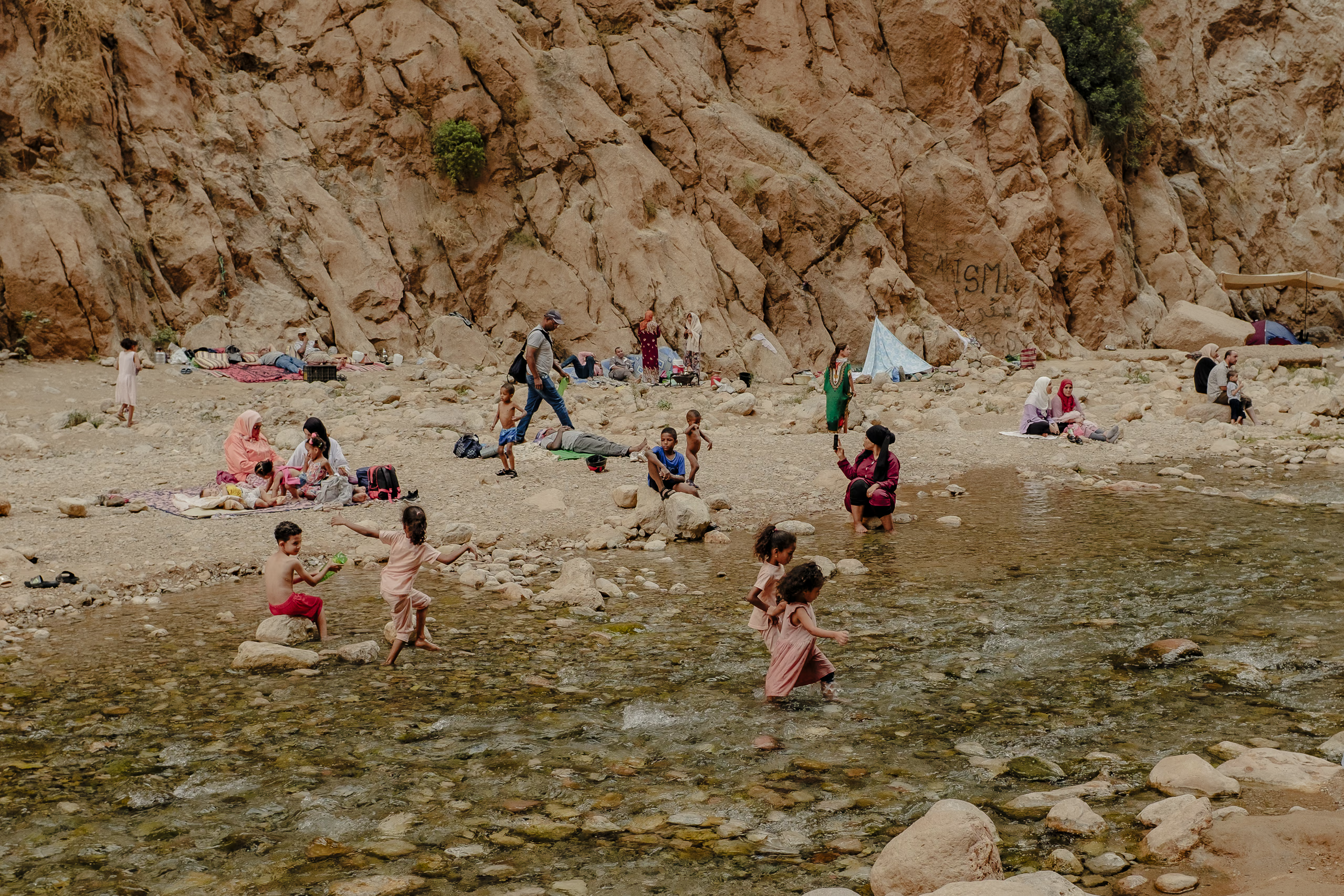
The irony that an infrastructural megaproject intended to mitigate the worst impacts of climate change is directly responsible for exacerbating them in Morocco’s most vulnerable regions is not lost to the people who live there. In Fint, an oasis village 20 kilometres south of Ouarzazate whose backup pipeline draws directly from Mansour Eddahbi, Aziz “de la Oasis” expressed to me anxieties that the village could soon be cut off. ”Two more months without rain,” he told me as we walked past mothers and their children washing clothes in ankle deep ponds that would typically be above the knee, “and there’ll be no more water.”
Later, over mint tea at his house, Aziz, his son and I listened to Touareg music from a smartphone speaker. Aziz pulled a wall-sized map of the sub-Atlas region from beneath a bench and rolled it out on the compressed earth floor, pointing to Amazigh highlands, date-growing valleys, and desert sand dunes. The map was marked with myriad mountain watercourses, all running towards the reservoir. Between the small Berber village of Fint, and the vast ”strategic military installation” of the Noor CSP, it was no mystery to Aziz whose access would be prioritized if the drought continued much longer.
That evening, I was woken from a nap on the terrace of a traditional earthen riad, south of the Asif Tidili river near Ouarzazate, by the riad’s owner, Lahsen. “Do you want to see the farm?” he asked. Sharing fragments of language, we walked between commonly-held croplands, grazing on fresh almonds, dates, pomegranates, and figs. Lahsen held a bottle of water, sipping at it as we went. Nearby, in the Mansour Eddhabi reservoir, water levels hovered between 8 and 12 percent of total capacity. The sun was setting and a pair of stray dogs followed us, picking at the pomegranate skins we had dropped behind us. Circling back to the riad, we passed a scrub of dirt half-enclosed by a low earth wall. “Here,” he said, pointing to the dusty ground, “la piscine; je voudrais construire une piscine.”