As Iran held the Persian Gulf under blockade in March, Japan was bracing for impact: 93 percent of the country’s oil came through the Strait of Hormuz. Two weeks into the war, Prime Minister Sanae Takaichi announced the country’s largest ever release from its strategic reserves.
It was a “sort of a deja vu moment,” said Yee Kuang Heng, an international security professor at the University of Tokyo. A seismic island with scant fossil fuel resources, Japan has been struck by a series of energy crises since World War II, shaping its energy policy around an ever-elusive goal of security. In the afternoon before she announced the emergency oil release, Takaichi had been attending a memorial to the Fukushima disaster that knocked out the country’s nuclear supply in 2011.

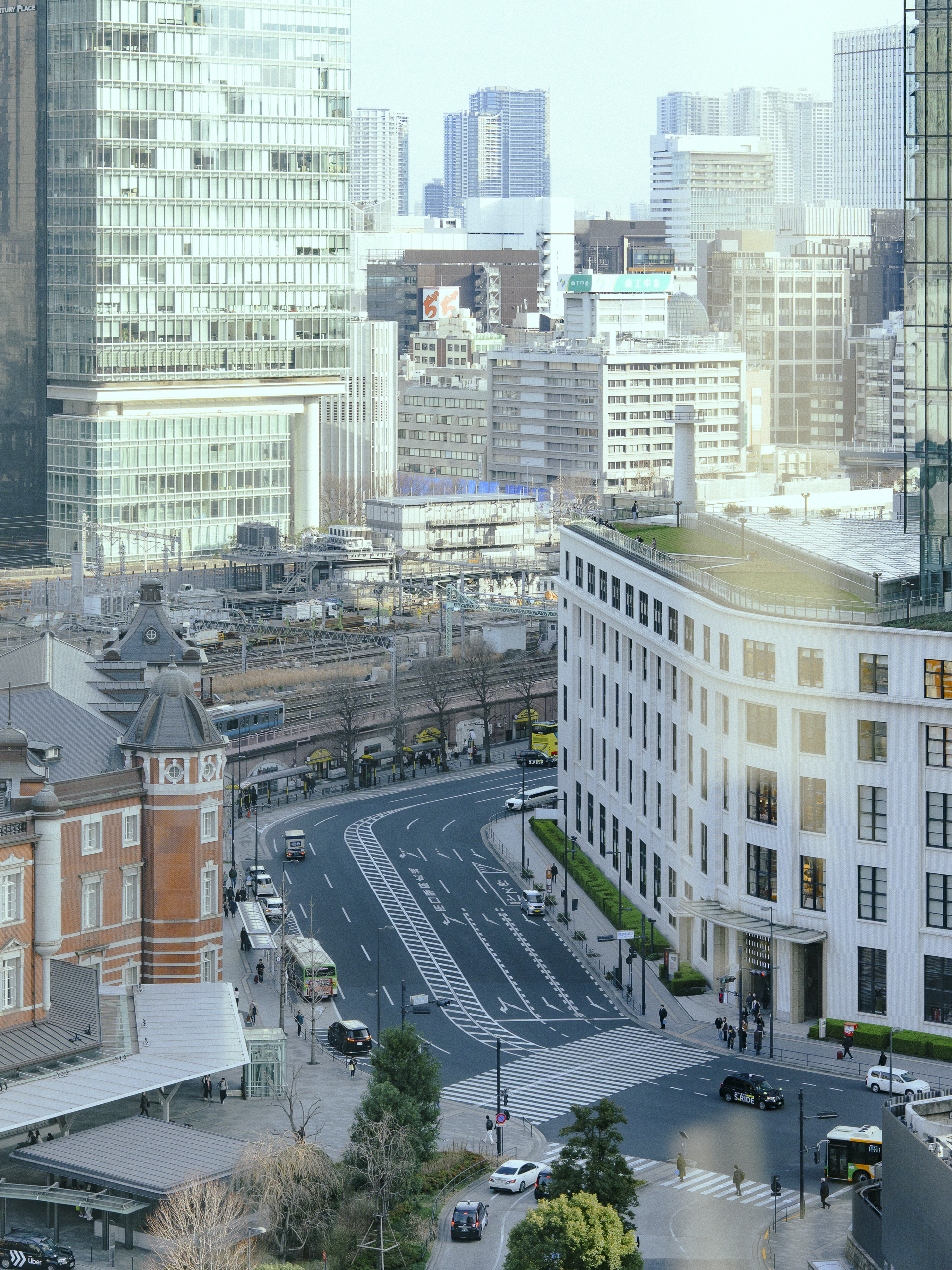
No one knew how long this latest disruption would last or how painful it could get. In a skyscraper overlooking bullet trains entering Tokyo Station, Taishi Sugiyama, a Japanese energy researcher with three decades’ experience, said: “The system seems to be very fragile now.”
But for Japan’s behemoth liquefied natural gas buyers, the prognosis was quite different. In the years of vulnerability after Fukushima, Japan’s L.N.G. industry built a globally powerful trading empire in collaboration with the radical commercial freedom of the United States. Despite producing no L.N.G. of its own, Japan is now the world’s fourth-largest seller.
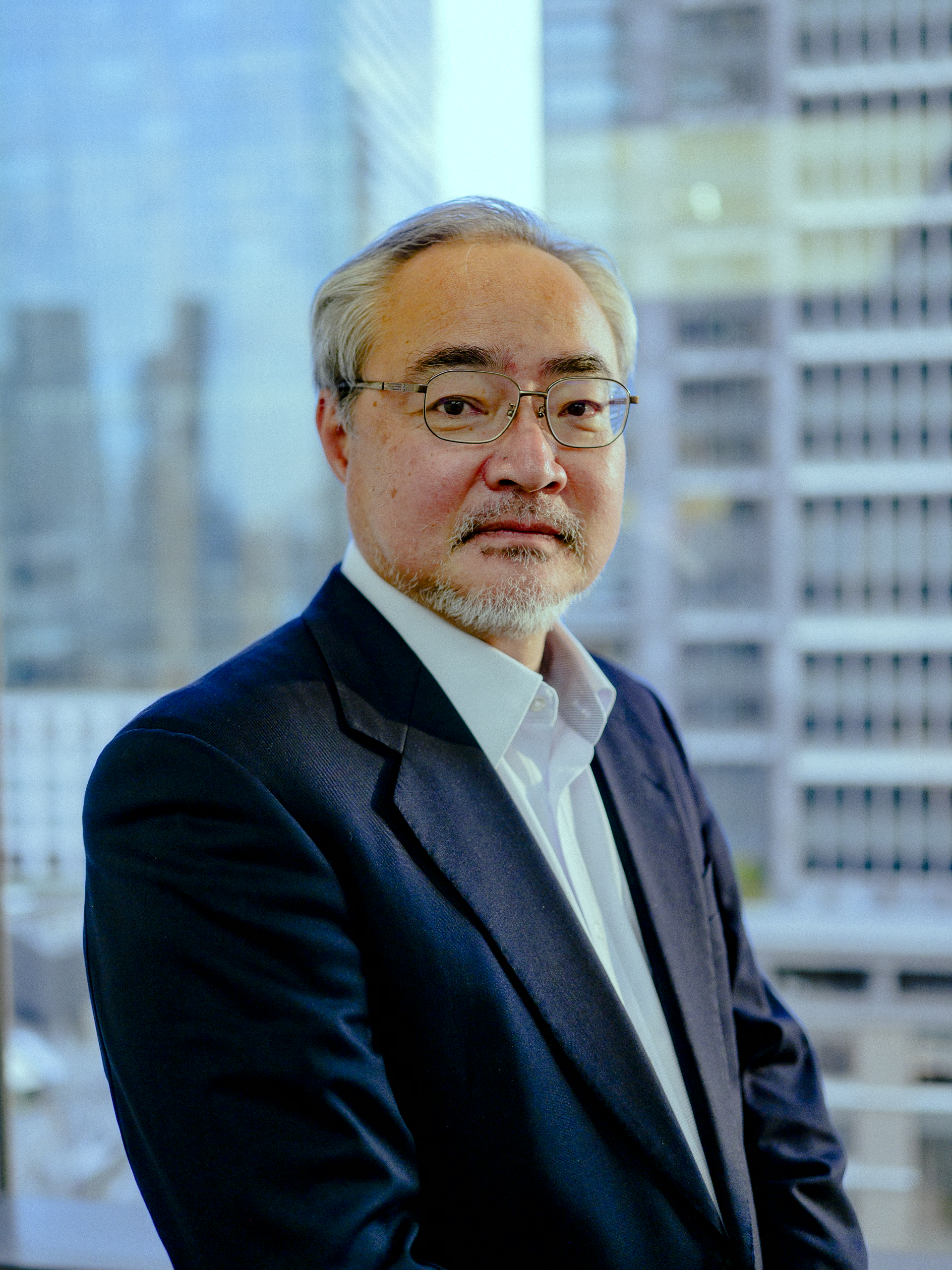
“Not to sound too cynical,” said Sam Reynolds, an L.N.G. researcher at the Institute for Energy Economics and Financial Analysis, of what this market position means for Japan. “But war, unfortunately, means there is money to be made.”
To see how, follow the journey of one Japanese-owned L.N.G. carrier, the M/V Diamond Gas Sakura, through the first six weeks of America’s war with Iran:
Ship location, draft, cargo owner and estimated destination data was sourced from Kpler and Bloomberg. The Asia gas price refers to the Japan/Korea Marker spot price, sourced from Oil Price API. Cargo value was calculated by multiplying the Asia gas price by the ship’s reported cargo volume loaded in Louisiana, minus a daily boil-off rate of 0.15 percent. Various undisclosed fees and private contract terms may have affected the final arbitrage value, hence the “tens of millions” estimate for final profit earned on the shipment. Special thanks to Louis Goddard at Data Desk for help accessing and interpreting data.
Just 10 years ago, this sale would have been impossible. But in the wake of the Fukushima disaster in the early 2010s, Japan saw an opportunity to strike a major change in the global L.N.G. market.
While Japan’s utility companies were scrambling to replace their nuclear plants with natural gas, a huge fracking-enabled surge in U.S. fossil fuel production had left America with more natural gas than it knew what to do with. The problem was getting it from where it was produced to where it was needed: Other than a small facility in Alaska which was winding down production, the U.S. had no L.N.G. export terminals.
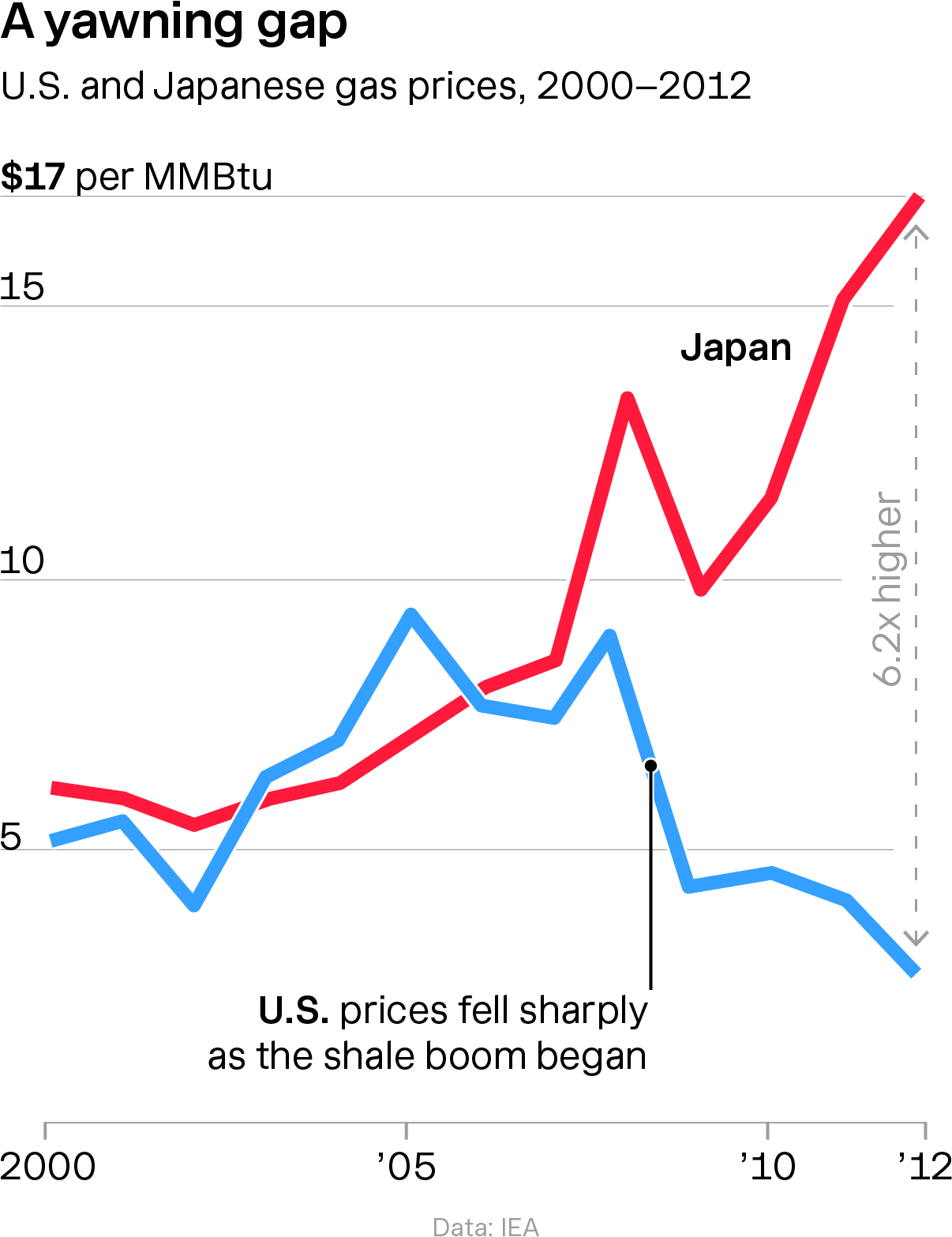
In all previous fossil fuel booms — from Australia to Qatar to Russia — oil and gas had been drilled, piped and exported by tightly integrated government-owned companies or international giants with government licenses. These companies’ huge scale gave them great power over how their product was sold: Not wanting sales competition from their customers, L.N.G. contracts forced buyers to deliver cargoes to specified locations, with no resales allowed.
With the U.S. shale boom, all that was about to change. “There is one unique factor in the U.S.,”said Steven Miles, a fellow at the Baker Institute Center for Energy Studies. In America, the government doesn’t own the fossil fuels: Private landowners do.
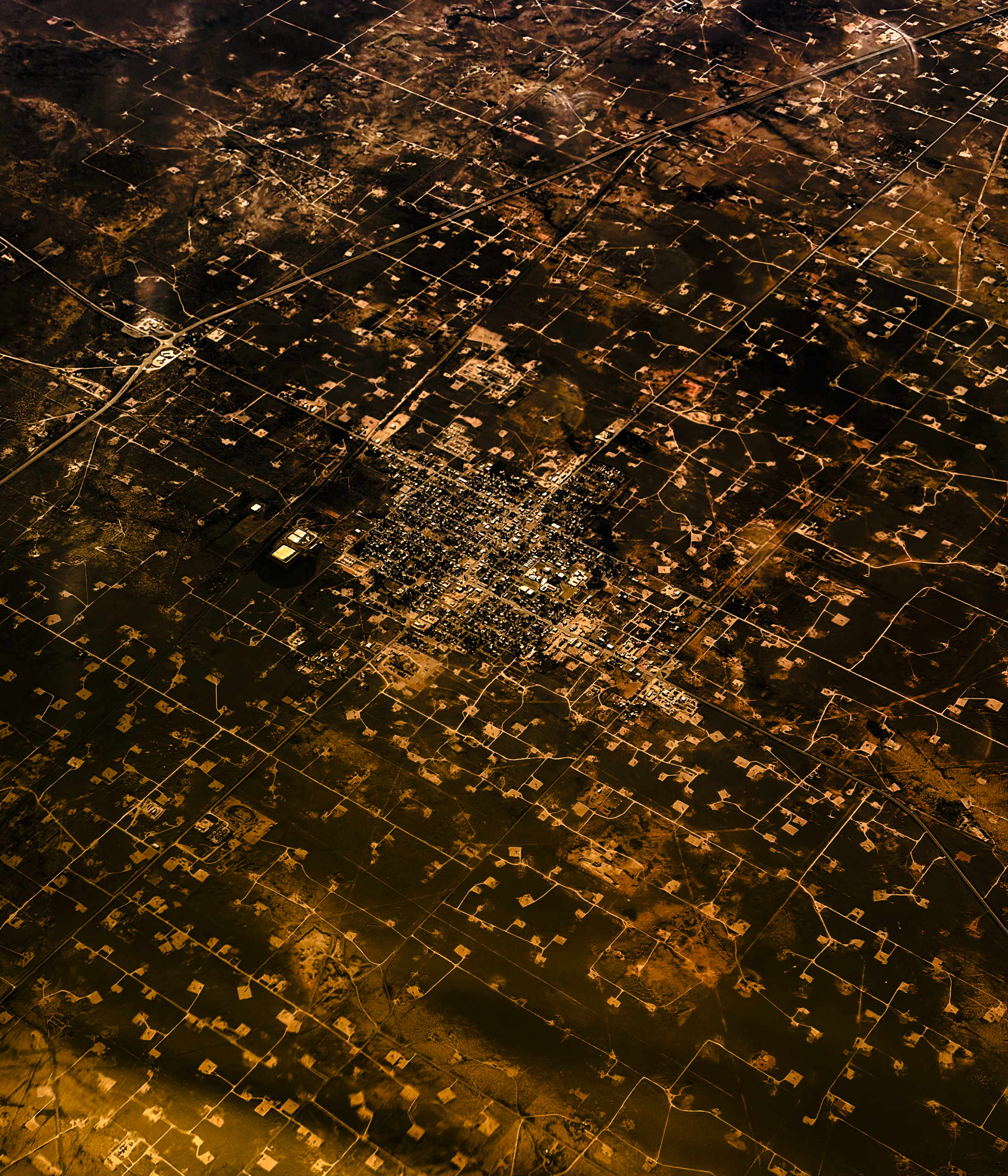
As the boom began in the 2000s, thousands of independent oil and gas producers struck deals with these millions of homeowners and farmers from Texas to West Virginia, drilling the gas from beneath their feet and selling it on open markets. It was a ruthless, mostly unprofitable business mired in cycles of booms and busts. The job of building terminals to export the gas as L.N.G. would come down to a different kind of entrepreneur.
The first was a former restaurateur called Charif Souki. “He was just a business guy,” said Miles. “He didn’t own the upstream. He didn’t own any pipelines. None of it.” The new breed of L.N.G. exporters he represented would simply be service providers. Their sales contracts — which Miles played a major role in writing — ensured that they never even owned the gas they sold, only connected it to the L.N.G. buyers at their ports. “And they didn’t give a darn what happened” to it after it left, Miles said.
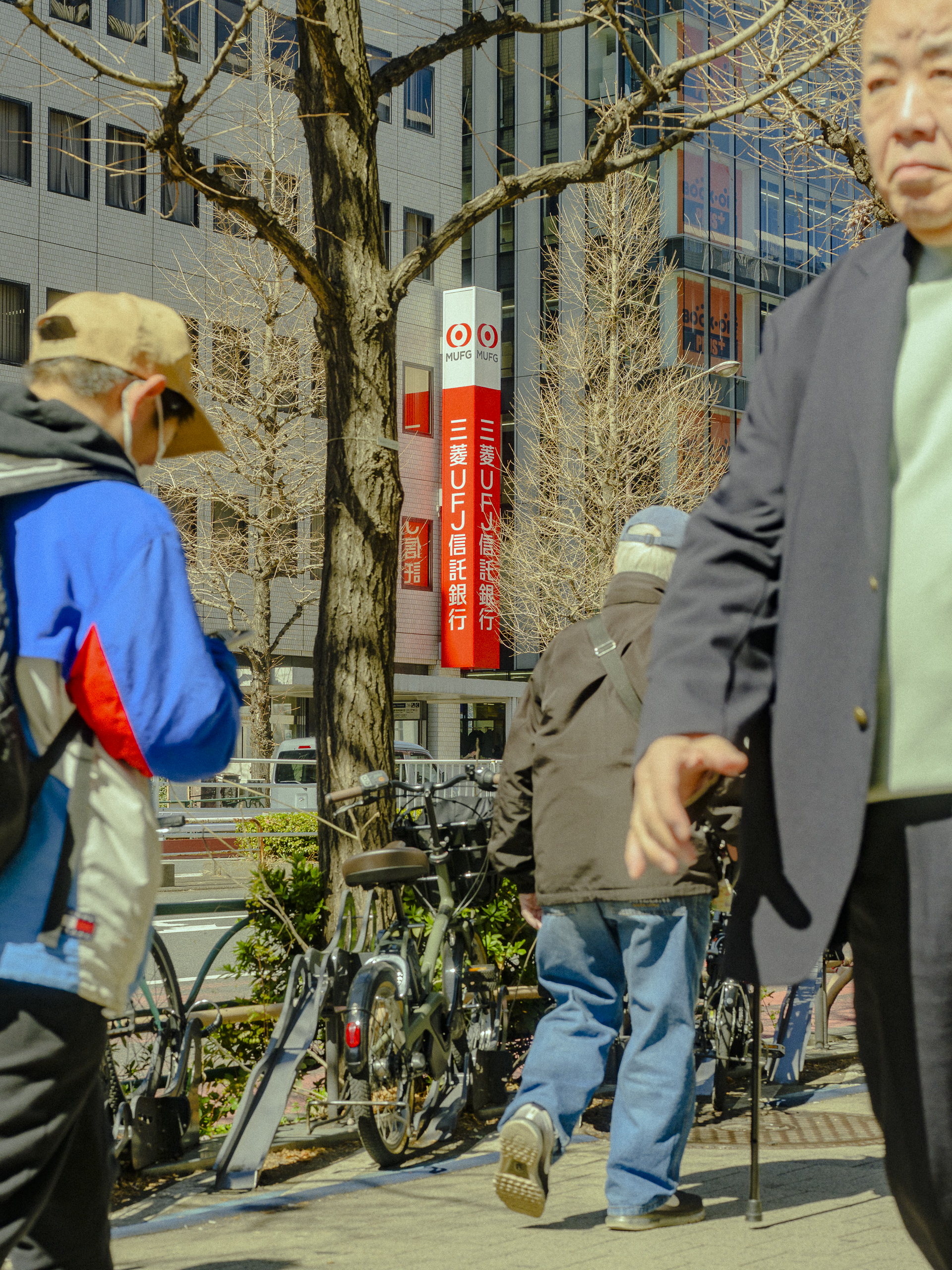
For Japan’s energy industry the commercial freedom offered a new path towards the ever-important ambition of securing reliable energy supplies. With American L.N.G., Japanese importers could buy more of the fuel than they needed and sell the excess to Asian neighbors. If world events knocked out part of its supply chain, Japan could pause the resales, or seek to profit from the global price spike.
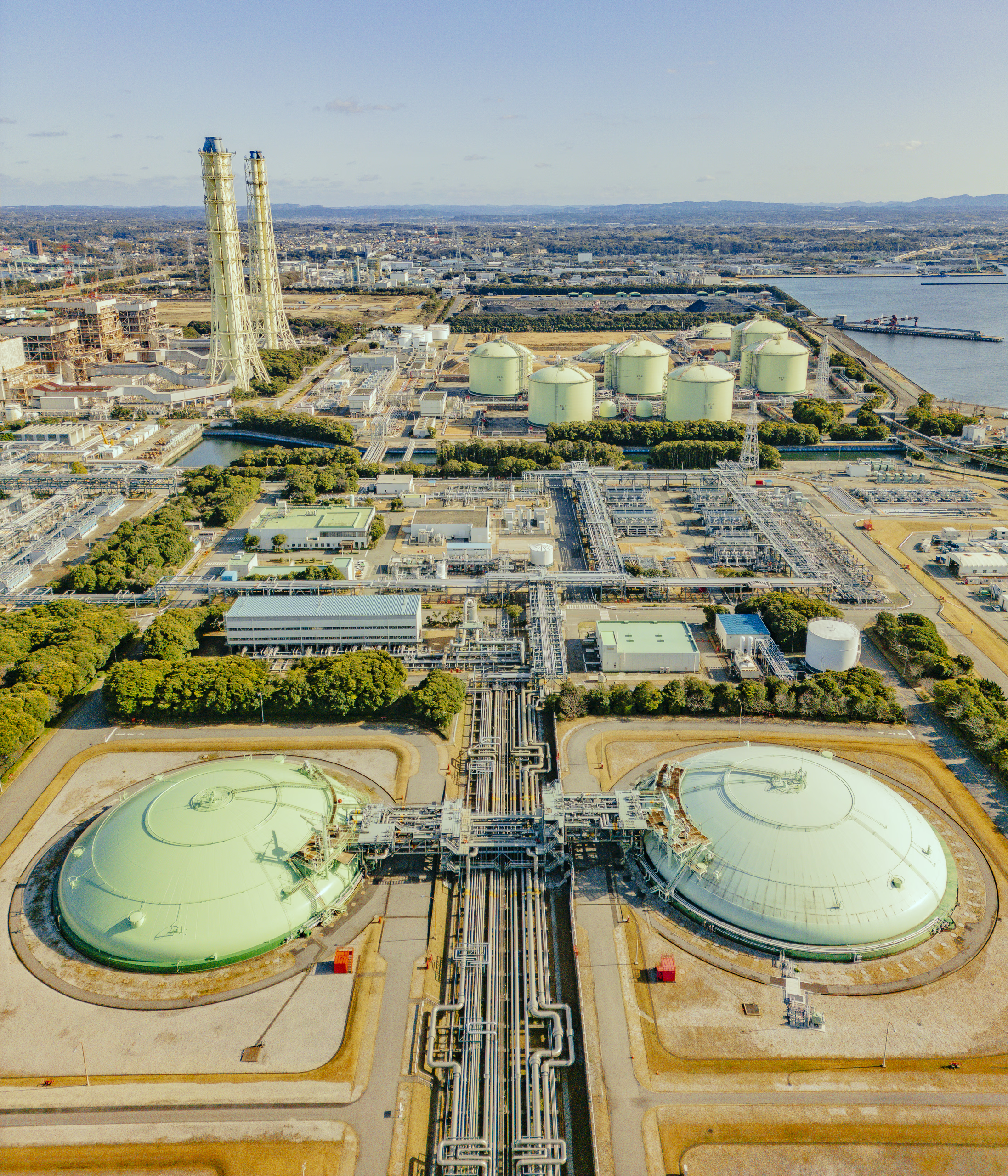
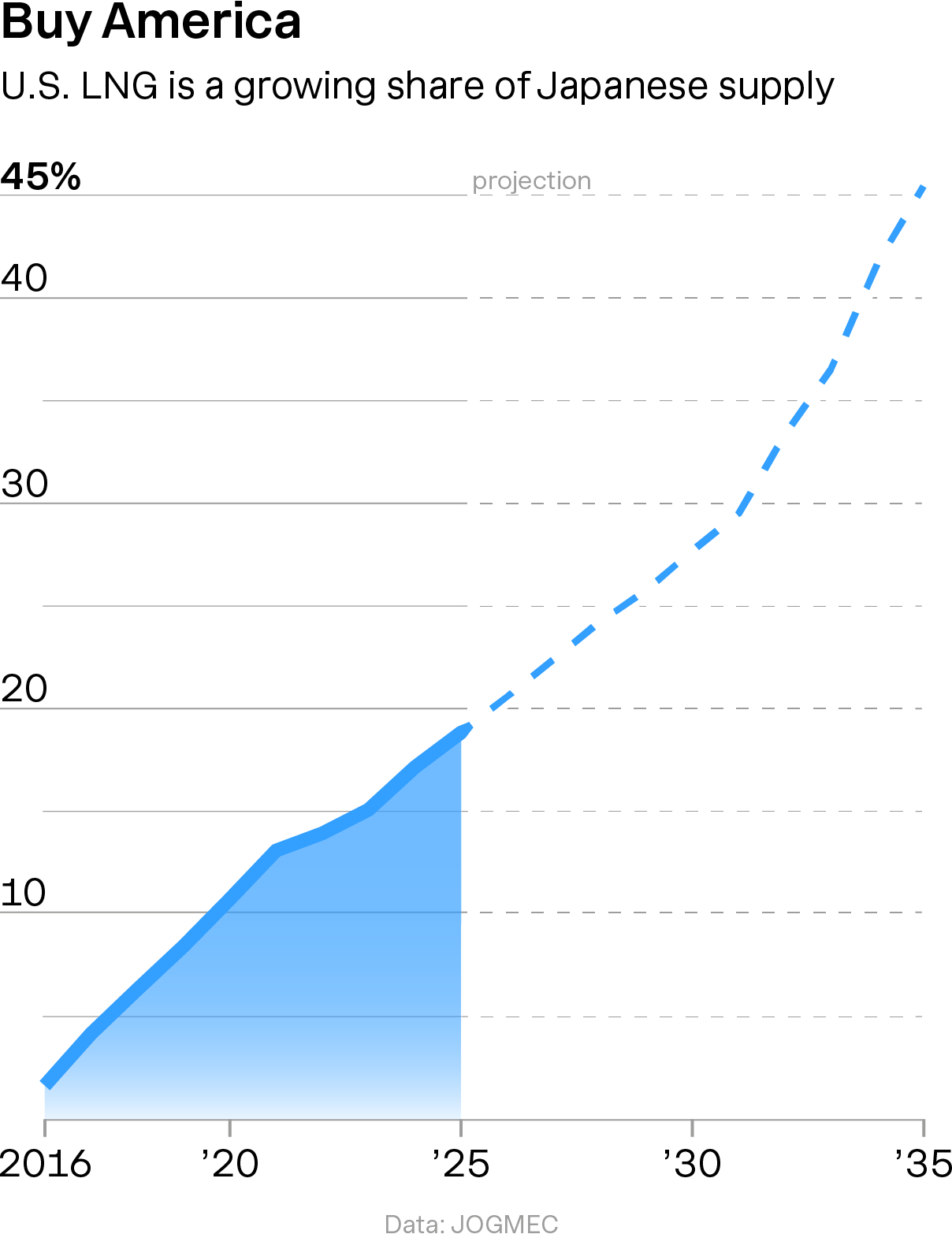
Since 2012, the country’s banks and energy companies have pumped tens of billions of dollars into financing U.S. export terminals and signing decades-long contracts for their L.N.G. They then used these new U.S. contracts as leverage to pressure other exporting countries to adopt similar terms.
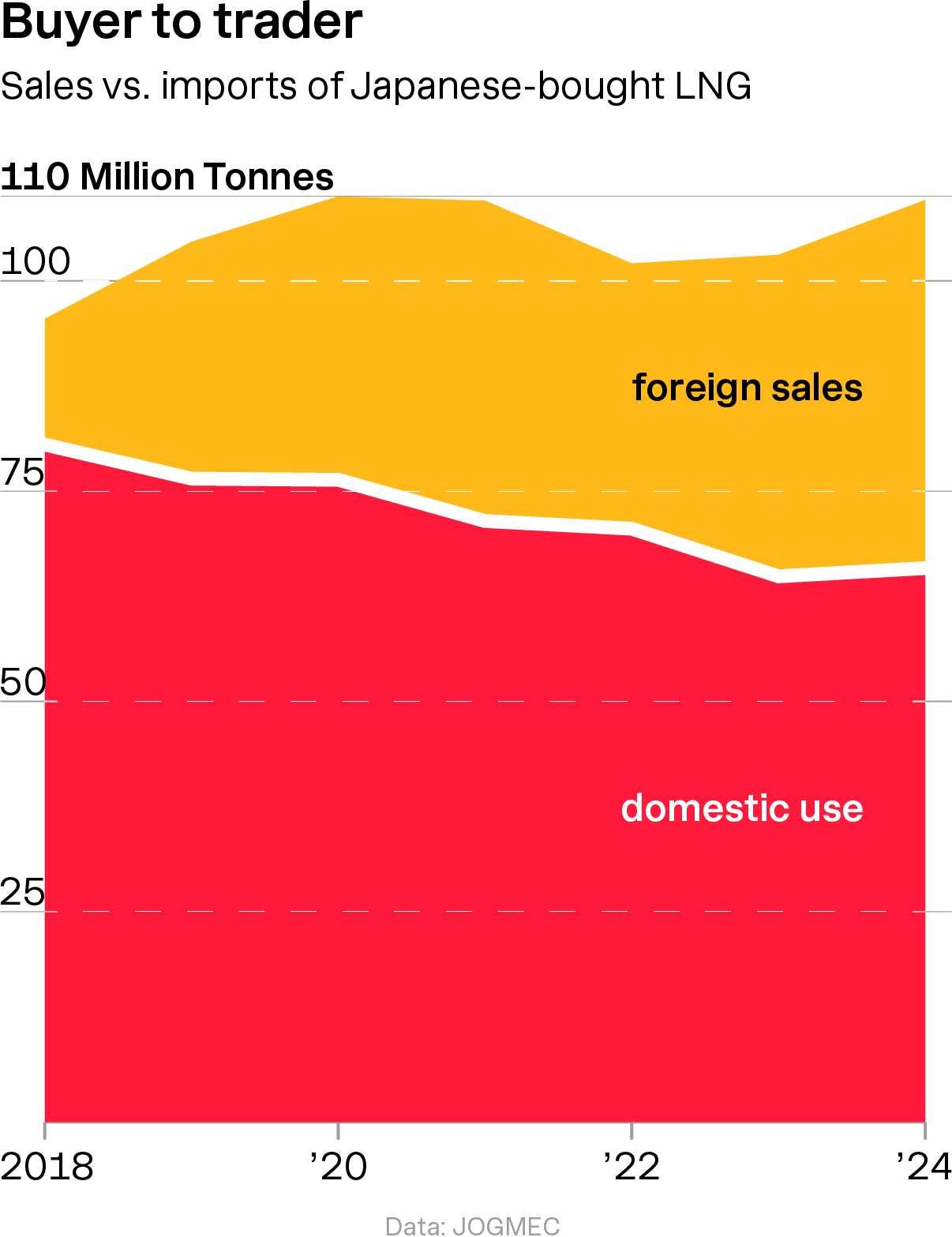
The shift “blew the market apart,” Miles said, and allowed Japan to transition from being a dependent L.N.G. buyer, to a powerful trader. By 2024, 40 percent of Japanese L.N.G. cargoes were resales like the Diamond Gas Sakura’s.
It wasn’t just the financial opportunity that drove Japan’s American L.N.G. investments. The country’s policymakers were also hedging against the potential geopolitical impacts of the U.S.’s new energy dominance. In the country’s 2014 strategic energy plan policymakers wrote that “it is important to consider” that the U.S.’s new energy independence may weaken its economic interest in the Middle East, leaving a superpower-shaped hole in the region’s stability and threatening Japan’s energy security.
The scenario they feared most was Iran blockading the Strait of Hormuz. In 2015, Defense Minister Gen Nakatani told the House of Representatives a blockade would threaten Japan’s “existence.” The prescience of that warning was largely missed by the country’s oil industry, which is even more dependent on the Strait now than it was in 2015. But Japan’s investments in U.S. L.N.G. have brought down its natural gas dependence on the Middle East to a fraction of the volumes it now sells on to other countries.
Many in the industry tout this as the success of a well-executed, decade-long strategy to guarantee Japanese energy security. But some analysts see a new set of dependencies emerging from this system, and still no final answer to the perennial state of energy insecurity Japan has experienced since World War II.
For one, the country could soon have too much supply, not too little. In the last year, Japan has committed to buy even more U.S. L.N.G. extending into the second half of the century.
But as the countries Japan relies on to buy its excess gas feel the pinch of higher prices caused by the Iranian blockade, some are planning to buy less. Vietnam, Thailand, Cambodia and the Philippines have all announced plans to decrease imports, lured away from volatile fossil fuel prices by cheaper Chinese-made renewables.
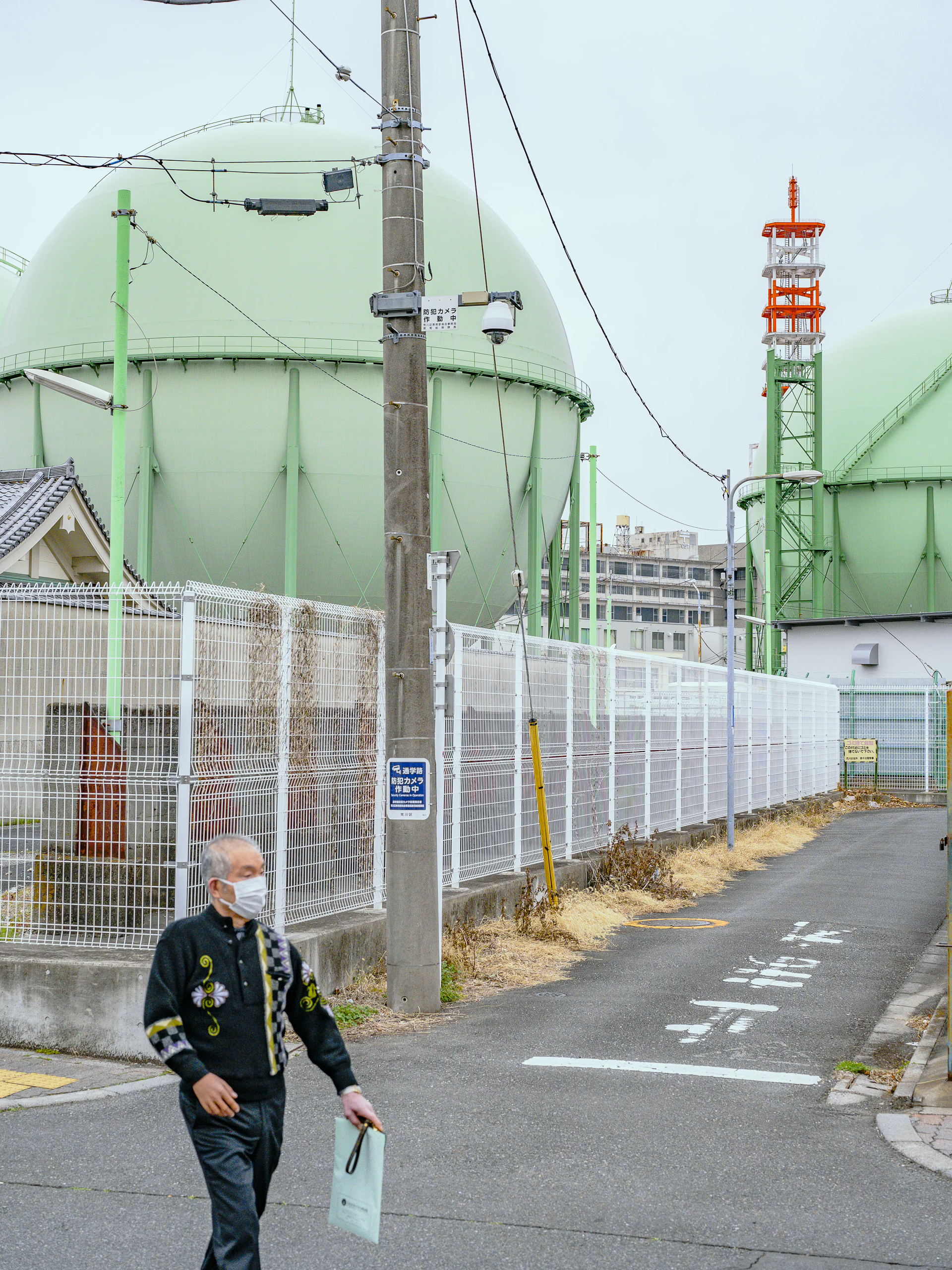
In an interview, energy security adviser to the Japanese government Hiroshi Hashimoto denied this “elusive notion of oversupply,” calling it “a misleading argument that discourages investment activities in energy production” with a “very bad impact.”
But there are many who say the only true answer to Japan’s exposure to international energy volatility is to develop its own domestic renewable sources. At a conference in Tokyo the day of Takaiachi’s emergency oil release, academic Tomas Kåberger said Japan was “resource poor” when fossil fuels were the world’s lowest-cost sources of energy. But now, “when solar and wind electricity are the cheapest sources of energy, Japan is no longer an energy-poor country.”
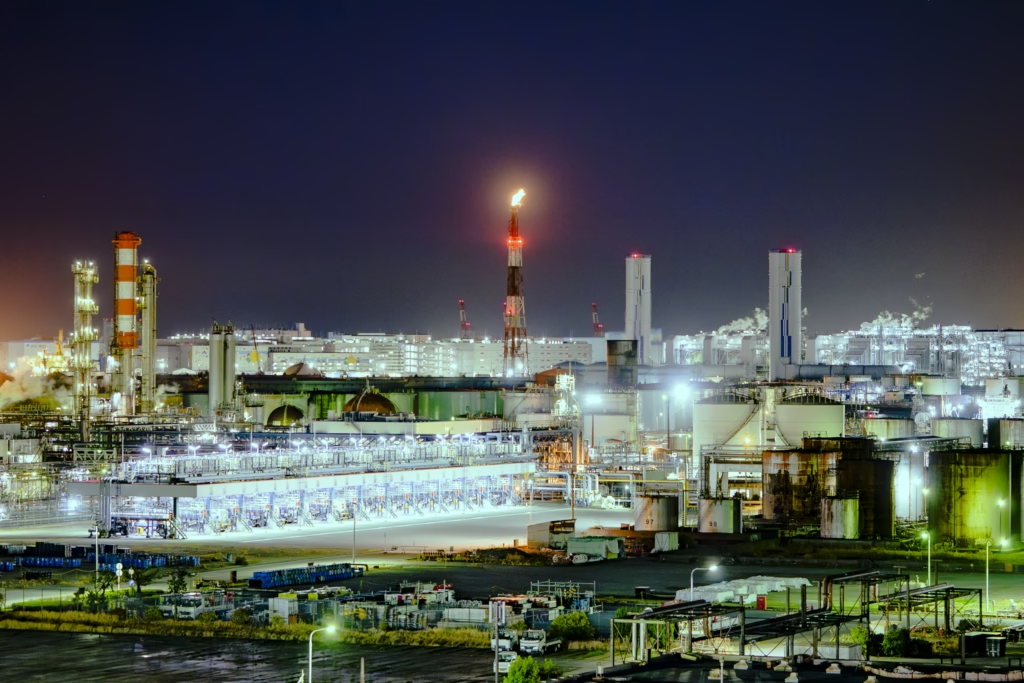
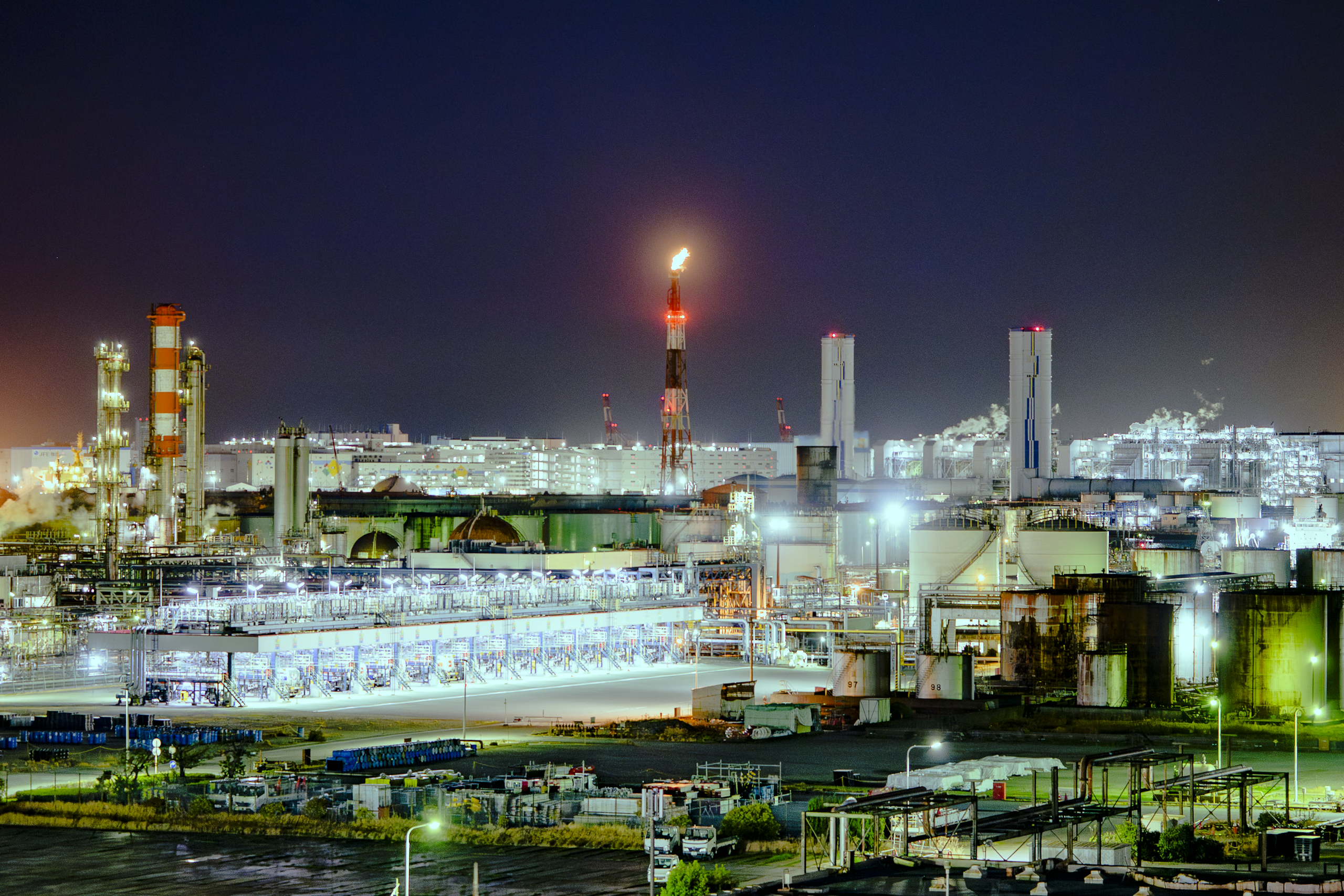
A few miles from the conference, anglers were reeling in fish at a Tokyo Bay harborside, their fishing rods resting on the guardrail. On every horizon, a cluster of chimneys choked smoke into the sky: the emissions of steelworks, gas plants, and oil refineries. In the water, a bulbous L.N.G. tanker was headed back out to sea, empty of its fuel, and a single wind turbine tilted slowly in the breeze. r
This story was supported by the Howard G. Buffett Foundation Borderlands Project →